

Solar & Battery Storage for Agricultural and Food Businesses in Yorkshire
As the National Farmers’ Union recently warned, rising energy bills and higher standing charges are placing intense pressure on farming businesses, especially operations that draw power seasonally (such as grain drying, refrigeration or processing) yet still pay standing charges year-round.
For many food producers and farm businesses across Yorkshire, this is a threat to competitiveness and cashflow. Against that backdrop, forward-looking businesses are turning to on-site solar generation and battery storage as a route to control costs, reduce grid reliance, and stabilise operations through turbulent energy markets.
How Solar & Battery Storage Works and Why It’s a Smart Bet
At its simplest, a solar and battery system captures daylight electricity, uses it in real time, and stores any surplus energy for use when the sun sets or during high-demand periods. In a farm or food production environment:
Solar generation offsets daytime electricity consumption (lighting, ventilation, pumps, motors).
Battery storage smooths demand peaks and provides energy during evenings, process surges or grid price spikes.
The combination can halve grid reliance in many cases, especially when paired with load-management strategies.
Over time, avoided grid costs, reduced import peaks, and wholesale energy savings combine to shorten payback and build resilience.
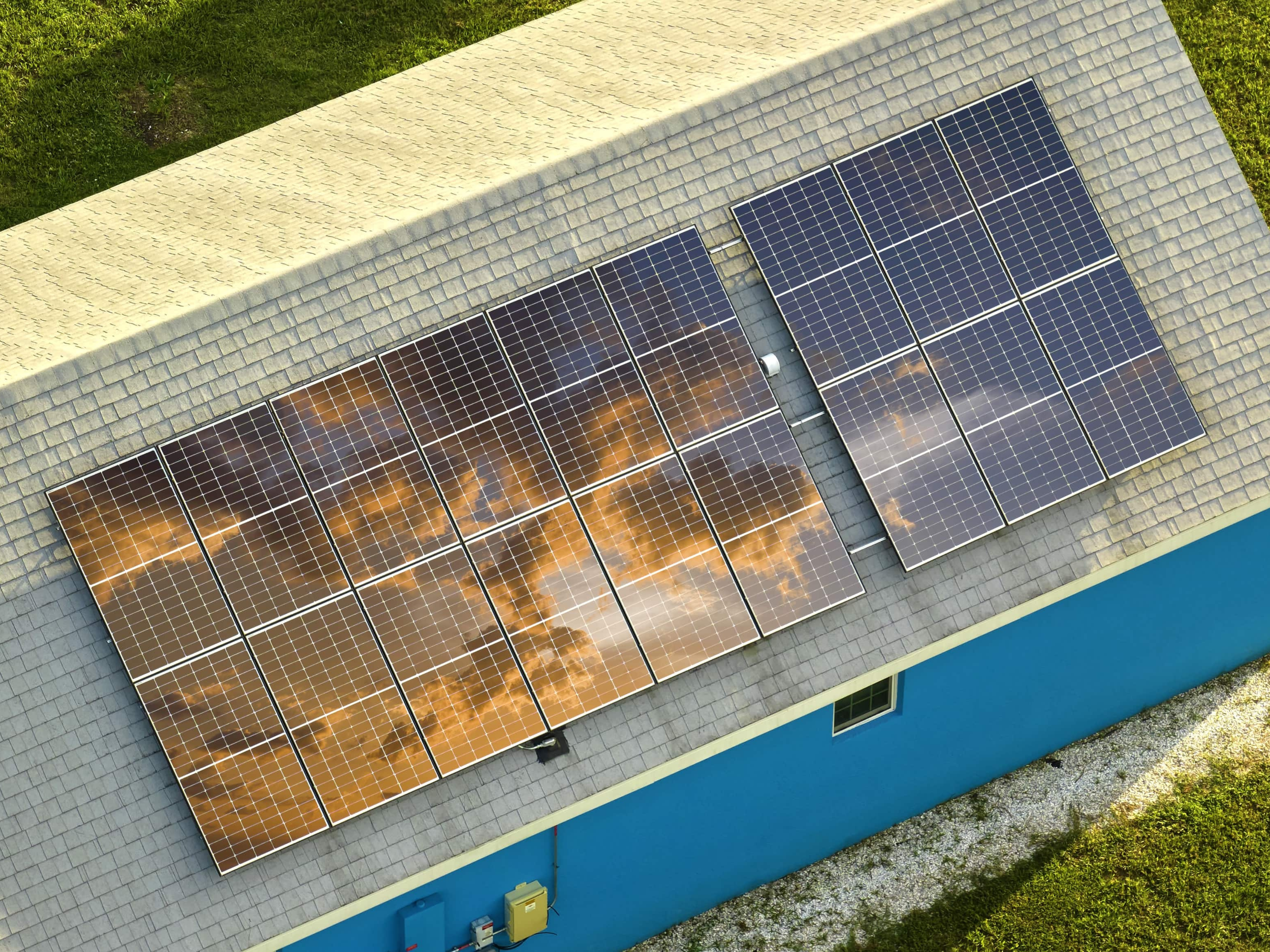
Because agricultural sites often have large roofs or buildings (e.g. barns, grain stores), they offer a perfect footprint for rooftop PV arrays, avoiding the complications of ground-mounted systems in most grant schemes.
-
At one of our recent projects, Greenfield Produce commissioned a 72 kW solar PV system with integrated battery storage, along with upgraded electrical and lighting infrastructure. The results were compelling:
Annual savings exceeding £10,600
Grid reliance cut by ~50 %
CO₂ reduction of ~12.2 tonnes per year
By structuring the system to feed core loads first and buffer peak demand with stored energy, Greenfield Produce now operates with far greater cost certainty and carbon visibility, a template for other farm or food businesses in Yorkshire considering similar investments.
Grant & Funding Opportunities for Agriculture Renewable Projects
To support the shift to low-carbon farming, several grant schemes now include solar and battery investments:

The Improving Farm Productivity (IFP) grant currently covers 25 % of capital costs for solar PV, battery storage, inverters, meters, wiring and installation, subject to a minimum project cost of ~£60,000 and grants from £15,000–£100,000.
Systems must generally be installed on farm buildings (roof or floating) rather than ground-mounted arrays.
Additional incentives include Annual Investment Allowance (AIA) tax relief, allowing firms to offset solar capital costs against taxable profits.
Importantly, most funding schemes require a verified energy audit and system design before releasing capital, a generic quote will not meet the criteria. That’s where a professional audit from Energy Oasis makes the difference.
Key Benefits for Farms & Food Production Businesses
-
Solar and battery systems directly cut electricity imports and shield your business from peak tariffs.
-
Stored power keeps essential operations running during outages or grid volatility.
-
Lower emissions strengthen sustainability reports and meet retailer and supply chain expectations.
-
Self-generation stabilises energy costs and simplifies financial planning.
-
Proper design and evidence help you unlock funding support and maximise return on investment.
Because agricultural and food businesses face pressure from both rising energy costs and net-zero commitments, these benefits translate into competitive advantage, not just compliance.
Book a Farm-Scale Renewable Audit & Design
Thinking of how solar and batteries might work for your business? The first step is to quantify your site’s load profiles and design the right system.
At Energy Oasis, we specialise in renewable energy systems for Yorkshire’s agricultural and food sector. We provide:
On-site audits of electricity and process loads
Solar and battery system modelling, sizing and ROI projections
Grant-aligned documentation and design reports
Technical independence to bolster funding applications
If you’re planning to protect your margins from soaring energy costs, and prove your site’s sustainability credentials, contact Energy Oasis today to start with an expert renewable audit.